AI Helpers
Accelerating my personal product development lifecycle with Claude
Published in Infinite Content on 4/9/2026
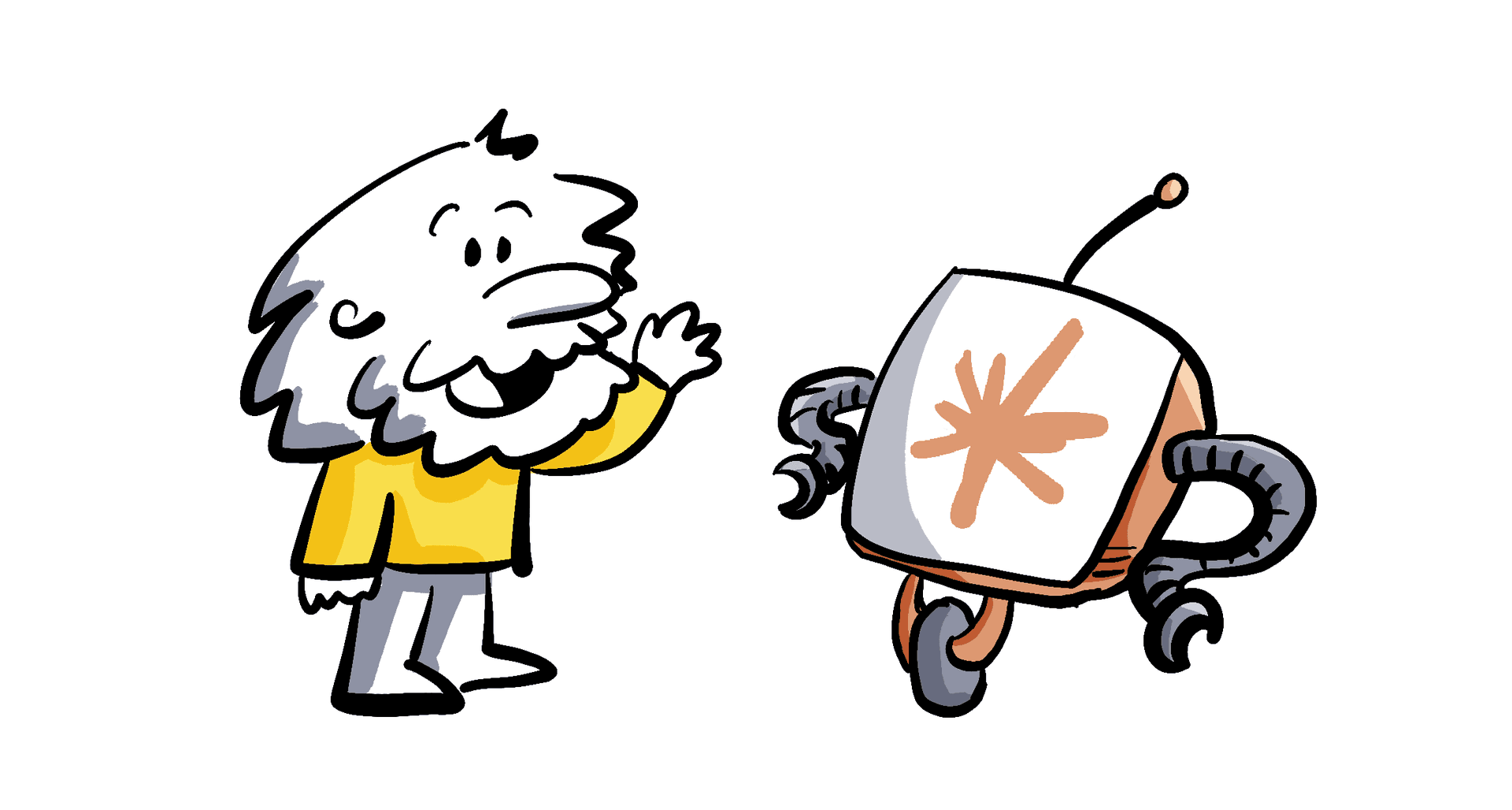
The act of updating this site used to take three sessions, often spent across the same number of days. As a coding novice, session one was spent remembering how to get my local environment running, connecting with Github, and rough research on how to approach a feature. Session two was implementation, coding up the content model and front-end experience updates, with frequent detours into Stack Overflow or Reddit posts to learn how to approach this or that. Session 3 was the final mile, working through deployment gotchas to finally launch the update.
Now, thanks to Claude Code, all of the above takes about 30 minutes. (In fact, as I've written this introduction, Claude has been tinkering in the background, spinning up a new page of the website to view a running feed of all Thoughts.)
AI as a Utility
Integrating AI into both my personal and professional workflows has been haphazard. I still default to the browser search bar and standard results versus the chatbot interface (though I'll read the AI overview). Tools like Microsoft Copilot are becoming more useful at work, particularly for Excel analysis, search and aggregation across materials, and summarizing meetings so attendees can focus on the conversation, rather than note taking. I still harbor reservations around generative AI capabilities, especially when used for entertainment. We already live in a world of infinite content, and the slop explosion—which is only going to get more effective—nudges us closer to a world of "just for you" content where we stare increasingly more at our tiny rectangles than at one another.
In the last few months, my orientation toward AI has changed. The first catalyst was Ethan Mollick's A Guide to Which AI to Use in the Agentic Era. "I have written eight of these guides since ChatGPT came out, but this version represents a very large break with the past, because what it means to 'use AI' has changed dramatically," Mollick writes. "Until a few months ago, for the vast majority of people, 'using AI' meant talking to a chatbot in a back-and-forth conversation. But over the past few months, it has become practical to use AI as an agent: you can assign them to a task and they do them, using tools as appropriate." Mollick then outlines the structures enabling agentic capabilities, and how the latest models are putting them into our hands.
Then I saw a demo from a product and UX team at work who stitched together a series of generative prototypes for a highly interactive user experience. Rather than present Figma mockups, the team shared digital prototypes that anyone could interact with natively. Not too groundbreaking, except for two thing: the team were not engineers, and iterations took hours, versus days or weeks. The team used AI to define the what and why behind the build too. Audio and chat inputs from a virtual meeting were synthesized live to generate a Product Requirement Document. This in turn became a reference anchor for the AI when generating iterations of the prototype.
Armed with the understanding of AI’s latest agentic capabilities and evidence that how digital products are built was poised to changed, I bit the bullet and subscribed to Claude Code's professional plan to try vibe coding myself.
The Acceleration
In the few months since, in short morning bursts before my family wakes, I've been able to ship the following enhancements to my site:
- A Bookshelf tracks what I've read. I’ve always wanted to have an easy reference point to remember and recommend books to others. This connects to a 3rd party API and displays books as a swipeable carousel, organized by year.
- A new Illustrations content type and page highlight various doodles I've done over the years. The content modeling was straightforward, but the experience includes a random set for the homepage and a modal experience, both of which would have strained my technical know-how.
- A persistent, responsive menu and footer.
- A Dark Mode that recognizes a user's default preferences and also provides a toggle.
- The aforementioned Thoughts page of all pasts posts that allows a user to progressively load the next batch. (And yes, this has officially launched despite me still working on this post.)
- Miscellaneous typography and style updates.
This backlog would like have taken a year plus of tinkering at my historic pace, and many of the above items would have been technically out of reach. Claude's model advancements (and nifty interface within Visual Studio Code) have given me an indispensable AI tool - a helper. As someone who relishes the creative act of going from nothing to something, it has been liberating.
Over the next few iterations of these tools, I imagine the limiting step of product development shifts from "build capacity" to the discovery phase. How do we define the right thing to build? What problem are we solving? How do we know it's a problem? What are several ways we could solve it? In short, the thinking, rather than the doing.
I could hand-wave this away for my personal site explorations, but the data tells a deeper story. Alongside all that "feature delivery," the only new content I've created on this site in the same time span—the thinking, if you will—has been this essay and a port of an old web comic. My "Now" backlog has one unchecked item on it - Write 1 Thought. Writing is an activity that still takes days to draft, refine, shape, and revise. And it's a creative process that I've kept to myself. I'm not ready to invite AI to the party.
As for what's "Next" and "Later," here are few things I'm interested in exploring further:
- AI Agents and getting hands-on with skill definition.
- Build an "app" or utility outside of my site from the ground up.
- Dive into "token" usage to understand the resources and costs to bring ideas to life.